
Introduction
For years, one of the first questions in paid marketing was simple. Who are we targeting?
Marketers typically identify audiences based on factors such as age, location, interests, profession, behavior, and various demographic traits. Campaigns were created based on meticulously chosen audience segments, with marketers determining who would view an advertisement and at what time.
Today, that procedure is evolving.
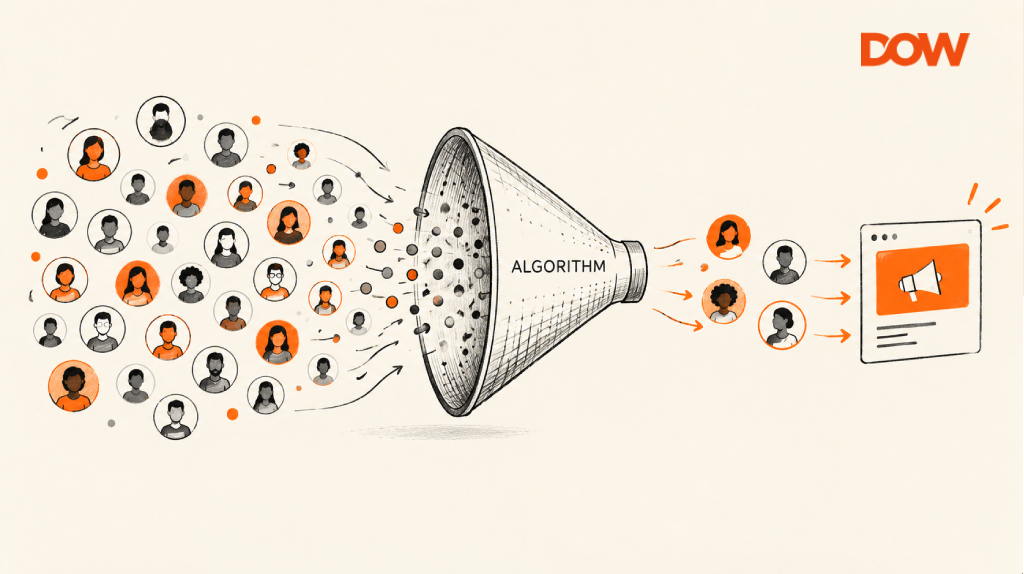
Advertising platforms increasingly rely on algorithms to work out who is most likely to engage, convert, or take a specific action.
From Defining Audiences to Predicting Audiences
Traditional targeting was largely about identifying who a brand believed its customers were.
A campaign might target a specific age group, city, profession or interest.The reasoning was simple, grasp the customer, narrow down the audience and deliver the advertisement to them.
Algorithmic targeting operates in a different manner.
Instead of depending entirely on predefined characteristics, platforms can draw on data from campaign interactions and past behaviour to spot patterns. Two people who look completely different on paper may still respond to an ad in much the same way. This shifts paid marketing from simply defining an audience to predicting an audience.
More Automation, Less Direct Control
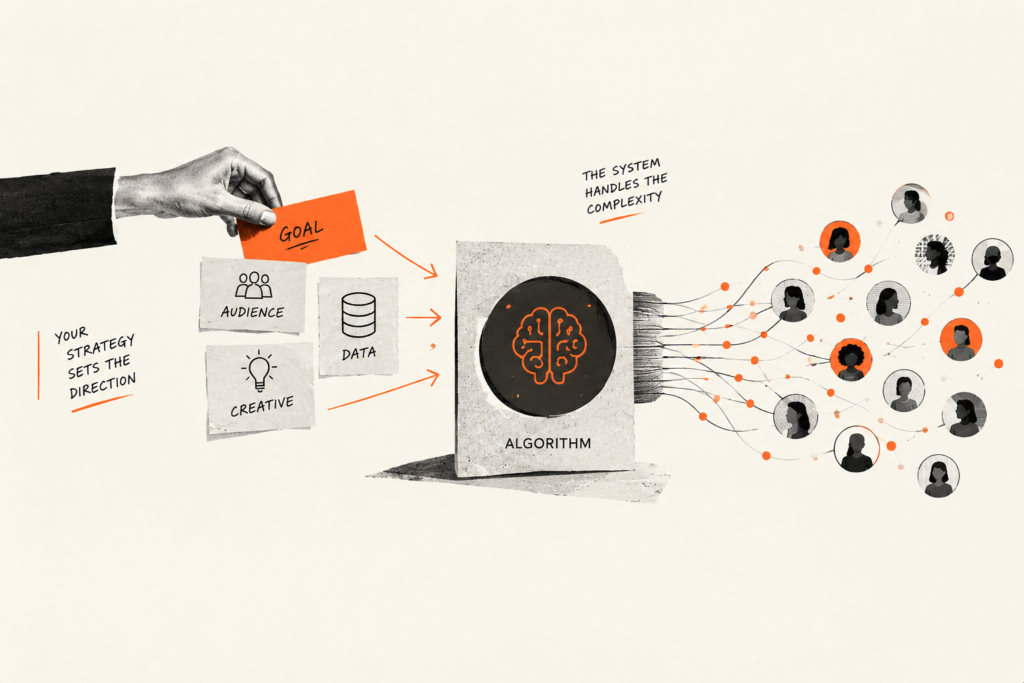
An algorithm can work through huge amounts of information much faster than a marketing team could by analysing audiences manually. It can keep tracking how a campaign is performing and adjust who sees the ad as it goes, without pausing.
But greater automation also means less direct control.
A marketer may understand the business goal and the target customer, yet not know exactly which individuals the platform is focusing on at any given moment.
That doesn’t necessarily make targeting worse. It changes the question. It’s no longer only “Did we pick the right audience?” It becomes: “Did we give the system the right objective, data, and creativity to find the right audience?”
Data Still Needs Human Thinking
More automation doesn’t mean less work for marketers. The job is changing, not disappearing.
Algorithms are great at finding patterns and deciding who sees an ad, and they can do it on a scale no person can. But they don’t know your business. They can’t decide what your brand stands for, whether you want more awareness, leads, or sales, or how your brand should be positioned. Those decisions still belong to people.
The results are only as good as what you put in. If your goal is unclear, the algorithm may work towards the wrong thing. If the ad itself is weak, better targeting won’t fix it. And if the data you track doesn’t reflect real business results, the algorithm may chase numbers that look good but mean little.
The Danger of Optimising for the Wrong Thing
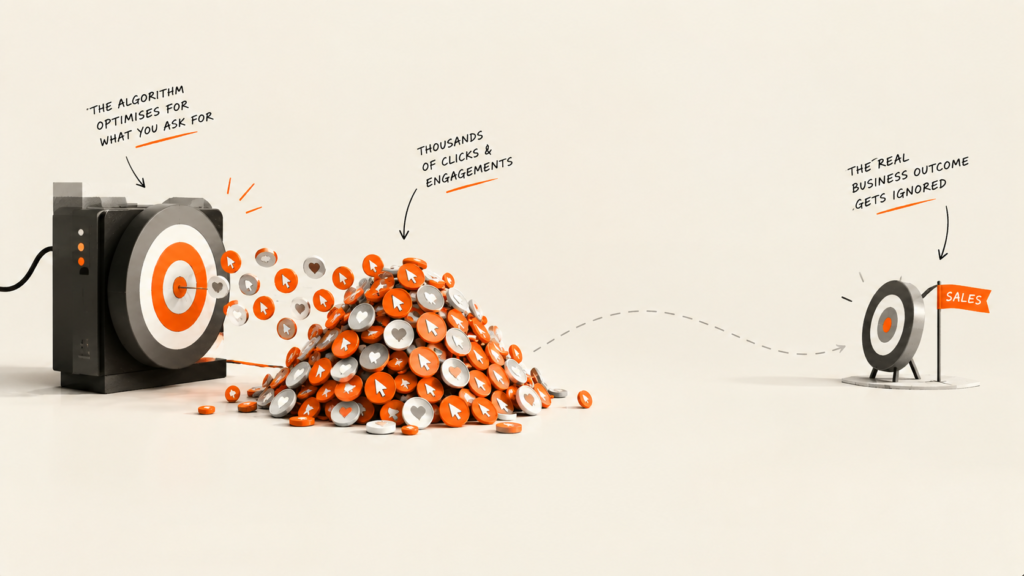
Paid ads can be misleading. A campaign can get thousands of clicks and still bring no real benefit to the business. An advt can get lots of likes and comments without reaching anyone who will actually buy.
The reason is simple, the algorithm does exactly what you tell it to do. Ask for clicks, and it finds people who click. Ask for sales, and it finds people who buy.
So don’t just ask, “Is the algorithm doing well?” Ask, “Is it working towards what my business actually needs?”
Good campaigns connect what the platform measures to what the business wants.
The New Role of the Marketer
As platforms become more automated, marketers are spending less time managing every targeting setting. Their role is becoming more strategic.
They need to set the right goal, understand the customer, create strong ads, feed the system useful data, and keep checking what the results mean for the business.
So marketers aren’t really losing control. They’re shifting from controlling every small decision to guiding the ones that matter most.
Human Strategy Meets Machine Intelligence
The future of paid marketing is unlikely to be about humans versus algorithms.
It is more likely to be about how effectively the two can work together.
Algorithms can process data, recognise patterns and make rapid optimisation decisions. Humans can provide context, creativity, judgement and strategic direction.
The strongest paid campaigns may therefore not be the ones where marketers control every detail, or the ones where they leave everything to automation.
They may be the ones where technology handles complexity while people remain responsible for the purpose behind it.
Because even when an algorithm chooses the audience, someone still needs to decide what the brand wants to say to them and why it should matter.