
Introduction
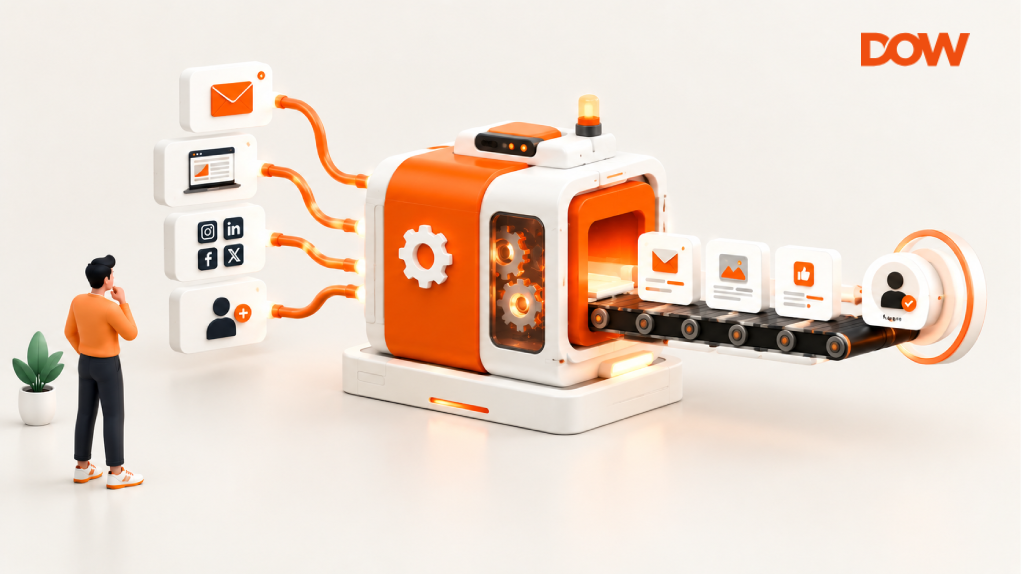
The emergence of digital technology has brought about a huge transformation in marketing. Today’s businesses use websites, social media, email, search engines, and other digital platforms to interact with their clients. It might be challenging and time-consuming to manually manage all of these channels. In this regard, marketing automation has grown to be a crucial component of contemporary marketing.
By using technology to automate tedious marketing tasks, marketing automation enables companies to communicate more effectively and on time. Automation enables marketing teams to work more productively while concentrating on strategy and creativity, from managing leads and sending emails to scheduling social media content and monitoring consumer behavior.
What Is Marketing Automation?
Using software and technology to carry out marketing duties automatically in response to predetermined rules, consumer actions, or timetables is known as marketing automation. Marketers can design processes that react to particular customer behaviors rather than manually completing each step.
For instance, an automated system can notify the sales team, add the user to a pertinent client list, and send a confirmation email when someone completes a form on a website. An automated reminder can also be sent to clients who abandon an online shopping cart.
The goal is not simply to reduce manual work. Effective automation helps businesses create consistent and relevant customer experiences at scale.
Saving Time and Improving Efficiency
One of the biggest advantages of automation is the ability to reduce repetitive work. Marketing teams often spend considerable time scheduling posts, sending emails, organising leads, preparing reports, and updating customer databases.
Automation is capable of managing numerous routine tasks. This allows marketers additional time to concentrate on tasks that necessitate human creativity and strategic thought, including crafting campaigns, grasping customer needs, producing content, and establishing brand identity.
For expanding companies, this effectiveness is especially beneficial as a small marketing group can handle a greater volume of communication without a corresponding rise in manual effort.
Creating More Personalised Experiences
Modern customers expect brands to understand their interests and provide relevant communication. Sending the same message to everyone may not always produce meaningful engagement.
Automation allows marketers to use customer information and behaviour to create different communication journeys. Customers can receive messages based on factors such as their interests, previous interactions, purchases, or stage in the buying journey.
For example, a new customer might receive an introductory email series, while an existing customer could receive product recommendations or information about related services.
When used responsibly, automation can therefore make communication feel more relevant rather than simply more frequent.
Supporting Lead Generation and Nurturing
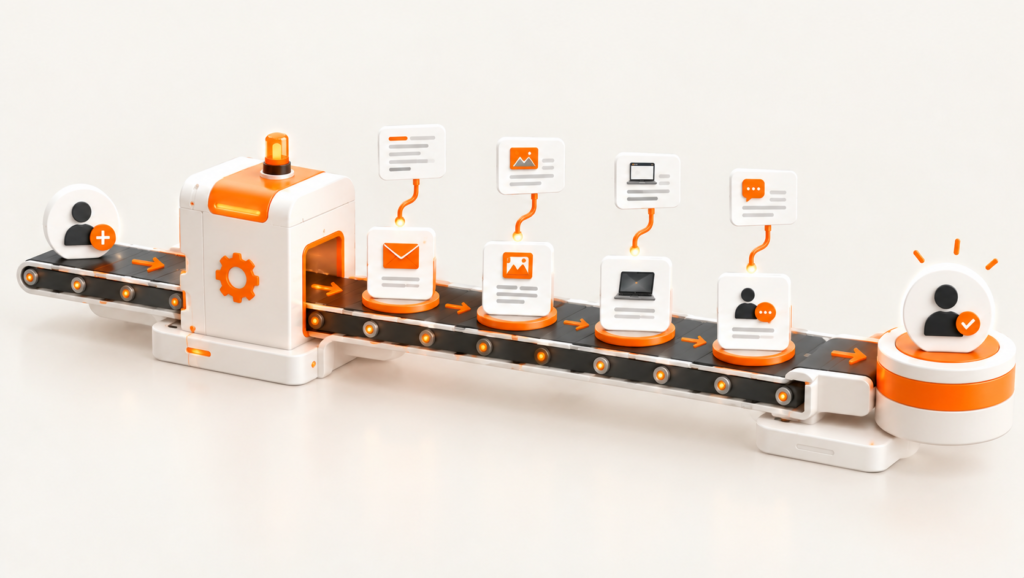
Automation also plays an important role in lead management. Not every potential customer is ready to make a purchase immediately. Some may need additional information before making a decision.
Automated lead-nurturing workflows can provide useful content at different stages of the customer journey. A potential customer might first receive educational information, followed by a case study, product details, and eventually an invitation to speak with a sales representative.
This process helps businesses maintain communication with prospects without requiring marketers to manually follow up with every individual.
Improving Data and Decision-Making
Contemporary marketing produces substantial quantities of data. Companies can monitor website traffic, email engagement, campaign results, conversions, customer interactions, and various metrics.
Marketing automation tools can gather and structure this data, simplifying the process for teams to comprehend the dynamics of their campaigns.
This information can assist marketers in pinpointing what content captures interest, which campaigns produce leads, and where prospective customers drop off in the purchasing process. These findings can subsequently enhance marketing decision-making.
Nonetheless, automation alone does not ensure improved decision-making. The results’ quality relies on the data gathered and the marketers’ ability to analyze it effectively.
Connecting Marketing and Sales
Another important role of automation is improving coordination between marketing and sales teams.
When a lead meets certain criteria, an automated system can notify the sales team or move the lead into a specific stage of the customer journey. This reduces the possibility of leads being overlooked and creates a clearer process for follow-up.
Marketing and sales can also use shared customer information to develop a better understanding of prospects and existing customers.
Automation Still Needs a Human Touch
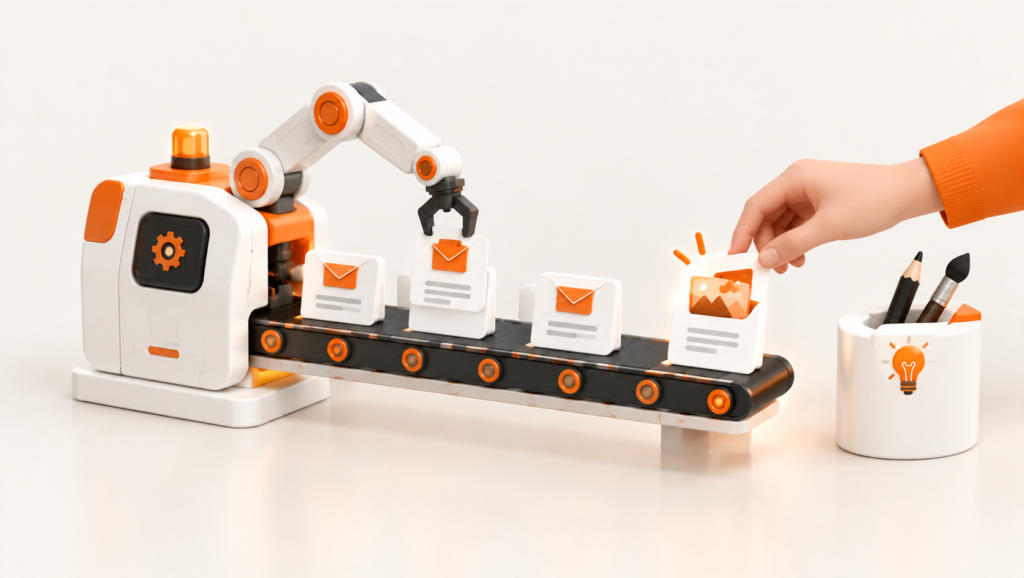
While automation offers significant benefits, it should not replace human creativity and judgement. Poorly designed automation can result in repetitive messages, irrelevant communication, or interactions that feel impersonal.
Customers still value authentic brand communication. Creative storytelling, strategic thinking, empathy, and relationship-building remain fundamentally human activities.
The most effective approach is therefore to combine automation with human involvement. Technology can manage repetitive processes, while people focus on the ideas, decisions, and experiences behind those processes.
The Future of Marketing Automation
As artificial intelligence, customer data platforms, and marketing technologies continue to develop, automation is likely to become more sophisticated. Businesses will increasingly be able to analyse customer behaviour, identify patterns, and deliver communication across multiple channels.
However, successful automation will depend on more than technology. Businesses will need clear strategies, accurate data, responsible use of customer information, and a strong understanding of their audiences.
Conclusion
Marketing automation has become an important tool for modern businesses because it improves efficiency, supports personalised communication, strengthens lead management, and provides valuable marketing insights. It allows businesses to manage increasingly complex customer journeys without relying entirely on manual processes.
But automation works best when it supports people rather than attempts to replace them. The future of marketing is not simply automated marketing it is a balance between technology, data, creativity, and human understanding. Brands that find this balance can create more efficient marketing operations while building stronger and more meaningful customer relationships.