

Introduction
In a digital-first world, businesses are no longer competing only on products, services, or prices. They are competing for attention. Customers have more choices, more information, and less patience than ever before. This is where a strong content strategy becomes essential.
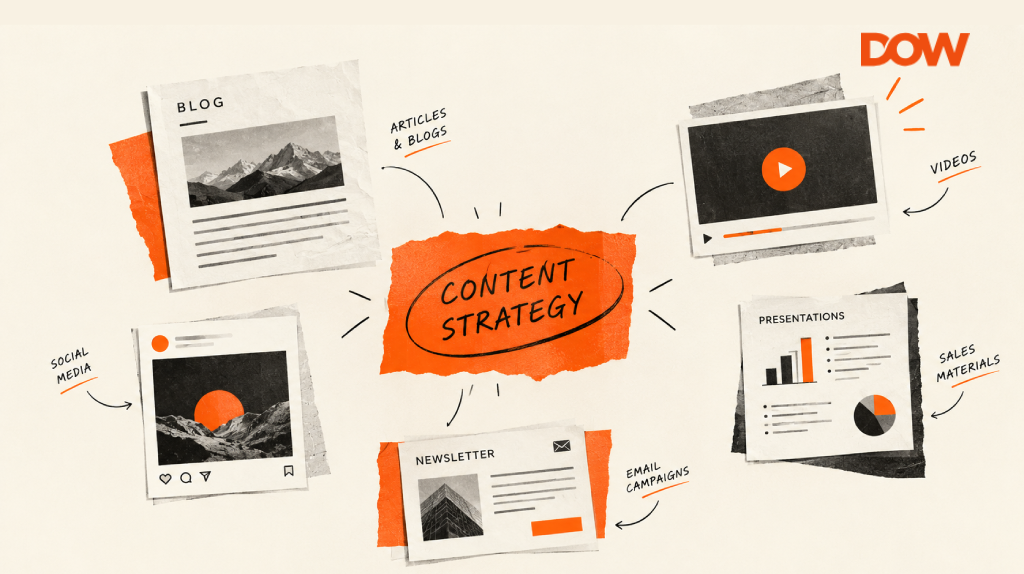
Content encompasses more than just social media updates, articles, or advertising communications. It is the manner in which a company conveys its knowledge, establishes trust, clarifies its worth, and maintains a connection with its audience. A strategically designed content plan guarantees that each communication serves a specific purpose and aligns with broader business objectives.
Builds Brand Awareness
Before customers buy from a business, they need to know that it exists. Consistent and valuable content helps brands remain visible in a crowded market.
From LinkedIn posts and blogs to videos, case studies, and newsletters, content gives businesses multiple opportunities to appear in front of their target audience. Over time, consistent communication helps people recognize the brand and associate it with a particular industry, solution, or area of expertise.
The goal is not simply to post more. It is to create content that is relevant, recognizable, and valuable.
Builds Trust and Credibility
Customers are more likely to choose businesses they trust. Content provides an opportunity to demonstrate knowledge instead of simply claiming expertise.
Educational articles, industry analyses, project displays, client testimonials, and professional viewpoints can establish a company as a trusted information resource.
For example, an engineering company can share insights about emerging technologies, while a pharmaceutical business can create educational content around quality, compliance, and industry developments. Such content shows potential customers that the company understands their challenges.
Attracts the Right Audience
Not everyone who views your material is the perfect customer for you. An effective content strategy aims at targeting individuals who are most inclined to require your products or services.
This begins with comprehending the target audience their issues, interests, inquiries, purchasing habits, and decision-making procedures.
When content addresses these specific needs, it becomes more relevant. Instead of saying, “We provide the best solution,” businesses can answer questions such as, “What problem does this solve?” or “How can this make my business more efficient?”
Relevant content attracts relevant audiences.
Supports the Customer Journey
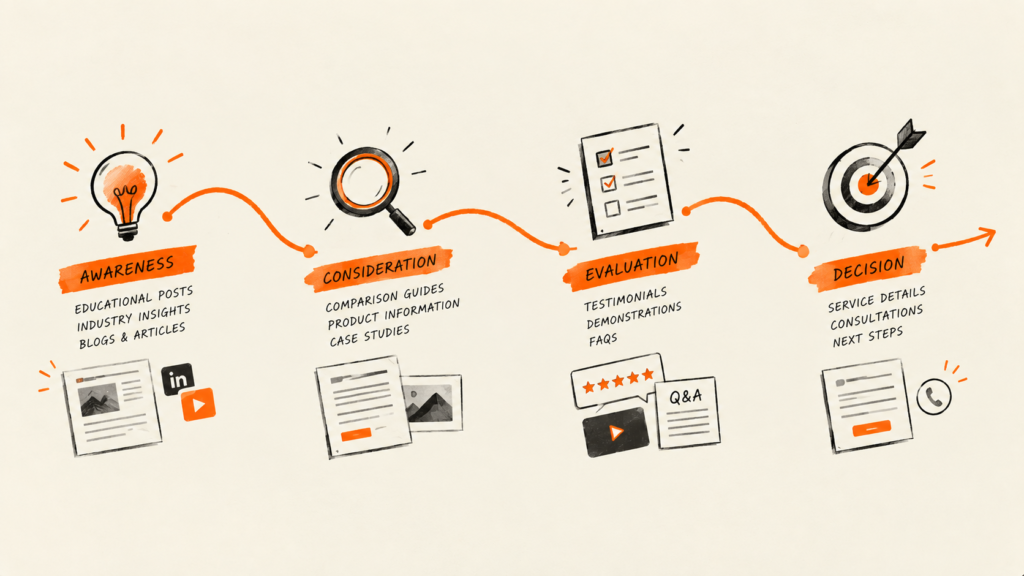
Customers rarely make a purchase immediately after discovering a brand. They move through different stages like awareness, consideration, evaluation, and finally, decision.
Content can support each stage.
At the awareness stage, educational posts and industry insights can introduce a problem. During consideration, comparison guides, product information, and case studies can help customers evaluate solutions. At the decision stage, testimonials, demonstrations, FAQs, and detailed service information can provide the final confidence needed to take action.
Creates Consistency Across Channels
A business may communicate through its website, social media, email, advertisements, presentations, brochures, and sales teams. Without a strategy, these channels can easily start communicating different messages.
A content strategy creates a common direction.
It establishes what the brand should talk about, who it is speaking to, what tone it should use, and what key messages need to be repeated. This creates consistency and makes the brand easier to recognize.
Consistency does not mean posting the same content everywhere. It means maintaining the same brand idea while adapting the message to each platform.
Helps Generate Leads and Sales
Good content does more than create engagement. It can contribute directly to business growth.
A well-planned content strategy can encourage website visits, enquiries, downloads, registrations, consultations, and product demonstrations. Strong calls to action can guide audiences from consuming information to taking the next step.
For B2B businesses in particular, content can play an important role in lead generation. A potential client may discover a company through LinkedIn, read its website articles, view a case study, and eventually contact the sales team.
Content can become an important bridge between marketing and sales.
Makes Marketing More Efficient

Without a strategy, businesses often create content at the last minute. This can lead to repetitive ideas, inconsistent quality, missed opportunities, and unnecessary effort.
A content strategy creates structure.
Businesses can plan topics around industry events, seasonal opportunities, product launches, customer questions, business goals, and industry trends. Existing content can also be repurposed into different formats.
For example, one detailed blog can become several LinkedIn posts, a carousel, a short video, an email, and a sales presentation.
This allows businesses to get more value from every content idea.
Conclusion
A strong content strategy is not about being present on every platform or publishing something every day. It is about knowing what to communicate, who to communicate with, why it matters, and how it supports business objectives.
In a market where attention is limited and competition is constantly increasing, businesses need more than promotional messages. They need meaningful communication that informs, engages, and builds trust.
The brands that consistently provide useful content are more likely to stay visible, remain relevant, and build stronger relationships with their audiences.
Ultimately, content strategy is not simply a marketing activity. It is a way for businesses to turn their knowledge, expertise, and ideas into lasting brand value.